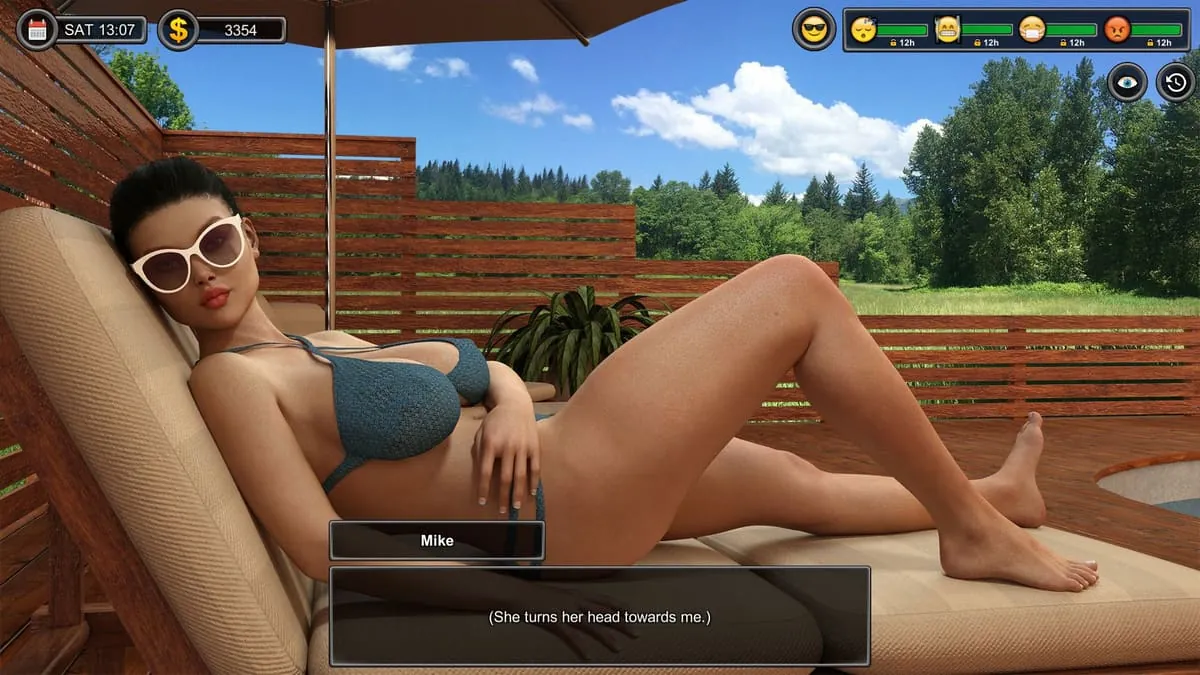
One Night Stand
Play One Night Stand
One Night Stand Screenshots


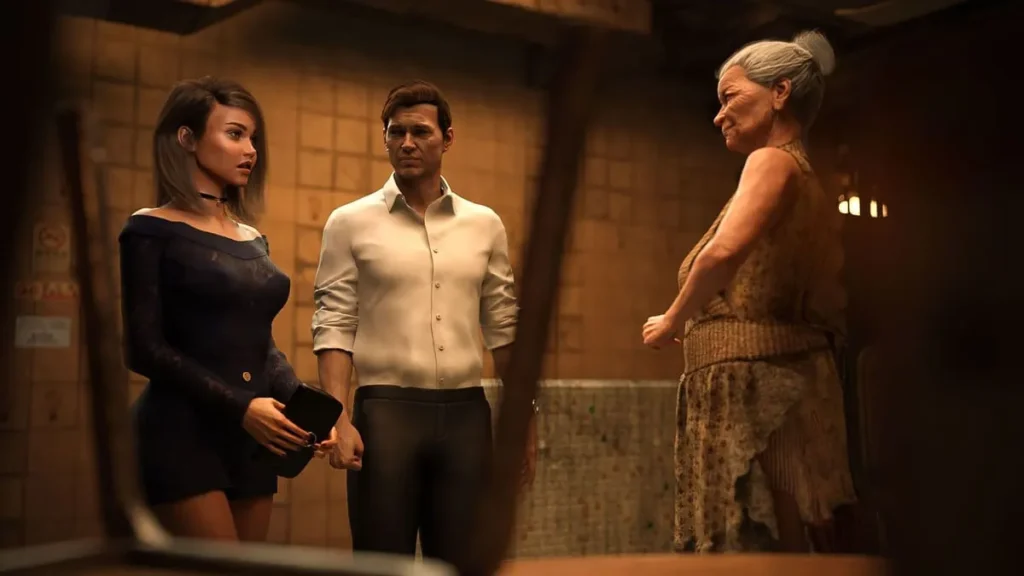



One Night Stand review
An intimate walkthrough, tips, and player insights for One Night Stand
One Night Stand is a short, character-driven interactive game that places you in a single, tense narrative moment and asks you to navigate choices and dialogue to shape the outcome. In this article I’ll walk you through the game’s core systems, narrative possibilities, and replay strategies so you can get the most from each playthrough. I’ll also share personal anecdotes about surprising outcomes I discovered while exploring different personality paths, plus practical tips for finding hidden interactions and unlocking alternate endings.
Gameplay & Mechanics in One Night Stand
Waking up in an unfamiliar room next to a stranger is a universal moment of panic. What do you do? What do you say? One Night Stand turns that exact, heart-pounding scenario into its entire world, and it’s the gameplay that makes you live every awkward, hilarious, and tender second of it. This isn’t a game about epic quests or complex combat; it’s a masterfully focused interactive narrative short game where every pixel and every word holds meaning. Your tools are simple: a cursor, your curiosity, and your sense of character. Let’s pull back the sheets and explore exactly how this intimate experience works. 👀
How the point-and-click loop works
At its core, the One Night Stand gameplay is built on a classic point-and-click mechanics foundation, but stripped down to its most essential, intimate form. A typical session lasts about 20-30 minutes, perfectly mirroring the short, contained nature of the morning-after scenario. You won’t be managing a sprawling inventory or solving obscure puzzles. Instead, you engage in a quiet, three-step interactive loop that drives the entire narrative.
First, you observe the room. The camera is fixed, presenting you with a still life of the aftermath. Your mouse becomes a detective’s lens. You hover over items, and the cursor changes, inviting you to look closer. This act of observation is the primary verb of the game.
Second, you interact with objects. Clicking on anything of interest—a phone, a half-empty glass, a piece of clothing—triggers your character’s internal monologue. You don’t just “pick up” a wallet; you think about whether you should look inside it. This is where the game feeds you information, context, and, most importantly, personality clues.
Third, you conversate with the other character. The information you gather from looking around directly fuels your conversations with her. Noticed her book collection? You might get a new dialogue option about literature. Saw the time on the clock? You can mention being late. This loop of See -> Think -> Speak is the elegant heartbeat of the One Night Stand experience. It’s a beautifully restrained system that makes you feel like an active participant in a delicate, unfolding moment, rather than just a reader of a story.
Dialogue choices, personality readouts, and consequence
Where the point-and-click mechanics set the stage, the dialogue choices in One Night Stand are where you perform. And this is no simple good/bad binary. The game is quietly building a personality profile for you based on every single thing you do and say. Are you being charming, awkward, aloof, or sincere? The game tracks it all, and the other character reacts accordingly. Her responses, her tone, and even which branches of conversation become available shift based on the cumulative you that you’re creating.
You’re rarely choosing what to do in a grand sense; you’re choosing how to be. The options reflect different emotional tones and levels of engagement. For example, when she asks what you’re thinking, you might get choices like:
- (Sincere/Awkward) “Just wondering how we got here…”
- (Charming) “I was thinking how lucky I am.”
- (Aloof) “Not much. You?”
These dialogue choices don’t just change the next line of text. They alter the entire trajectory of the interaction. Pushing too hard with charm might come off as sleazy. Leaning into awkwardness can be endearing or just… painfully weird. The game’s genius is in its “personality readout,” a subtle system that manifests in her facial expressions, her body language, and the options that slowly disappear or appear as she forms an opinion of you.
Failure states are not about “game over,” but about social and emotional outcomes. You can end the game with a rejection (a door closing in your face), an awkward fallout (a silent, tense goodbye), a potential friendship, or a moment of mutual understanding that feels genuinely meaningful. The ending you get is a direct report card on the persona you crafted through your clicks and choices.
Example Interaction:
1. Observe: You click on your phone lighting up on the floor.
2. Internal Monologue: “Ugh. Several missed calls. Probably from my roommate. He’s going to have a million questions.”
3. Dialogue Trigger: This observation unlocks a new conversational path.
4. Choose Your Tone:
* (Awkward/Sincere) “My phone’s going nuts. My roommate is probably worried sick.”
* (Aloof) “Someone’s popular.” (Nods to the phone)
* (Charming) “The outside world is trying to reclaim me already. I’m ignoring it.”The first might lead to a shared laugh about nosy friends, building connection. The second might shut down the conversation, making you seem disconnected. The third could be seen as sweet or possibly insincere, depending on your previous choices.
I once completely changed an entire playthrough by inspecting what seemed like a trivial item: a used train ticket peeking out from under the bed. My internal monologue wondered if she had a long commute. Later, when conversation stalled, I had a new option: “That’s a long train ride you do every day.” Her face softened with surprise—it showed I’d paid attention to a small, personal detail. That single observation, born from clicking on a tiny pixel, steered us away from an awkward silence and toward a more vulnerable, sincere chat. It was a powerful reminder that in this game, nothing is just set dressing.
Inventory, environment clues, and reading the scene
Forget about collecting keys and combining objects. Your inventory in One Night Stand is the information in your head. The clues aren’t for solving a murder; they’re for solving a person. Every object is a potential conversation starter or a piece of a puzzle that tells you who she is, and by extension, who you might choose to be in response.
The environment is a narrative tapestry. Let’s break down some typical items and what they offer:
| Item | Potential Internal Monologue / Clue | Branching Dialogue Potential |
|---|---|---|
| Her Phone | Who is calling her? A picture on the lockscreen? Is she ignoring it? | Asks about her life, job, or relationships. Can lead to trust or prying. |
| Your Wallet | Your ID, your cash situation. A reminder of your own identity and responsibilities. | Can trigger thoughts about leaving, or honesty about your own life. |
| Empty Wine Glass | Evidence of the night before. How does it make you feel? Regretful? Nostalgic? | Opens up conversation about the previous night, with playful or serious tones. |
| Her Clothing | Style, fabric, where it’s tossed. It humanizes her and defines the space. | Can lead to complimentary, awkward, or overly familiar remarks. |
| Books on Shelf | Reveals intellectual interests, tastes, and personality. | Provides a safe, deep topic for connection if you share interests. |
| The Clock | The relentless march of time. How late is it? Do you have obligations? | Creates urgency, offers a reason to leave or a reason to stay in the moment. |
“Reading the scene” is the most critical skill in this interactive narrative short game. It’s not about finding everything, but about finding the things that resonate with the character you want to portray or the story you want to explore. A painting on the wall might hint at a sentimental side. A fitness magazine might suggest a lifestyle. This is why replay strategies for One Night Stand are so rewarding. On a second run, knowing what an item can reveal, you can intentionally seek it out to craft a completely different dynamic. Maybe this time you’ll play as someone who notices all her art supplies and connects as a fellow creative, whereas before you were the guy who only talked about the football game on her TV.
This is the heart of the game’s replay value. It’s not about finding a “winning” path, but about exploring the fascinating spectrum of human interaction within this single, specific scenario. Each object is a door, and each dialogue choice is a step through it.
Your Checklist for a Great First Morning (and Many More)
To truly master the One Night Stand gameplay, keep these practical tips in mind:
- Slow Down and Hover Over Everything. 👆 Treat the first few minutes as pure exploration. Move your cursor slowly across the screen. The subtlest sparkle or text hint can lead to a major character insight.
- Prioritize Personality Clues. Your goal isn’t to “collect” all items, but to find items that give you a sense of her. Books, photos, and personal items are often more fruitful than generic room details.
- Your Internal Monologue is Your Guide. 💭 Pay close attention to what your character thinks when you click something. It frames the context for how your subsequent dialogue choices will land.
- Experiment with a Consistent Tone. Pick a personality (awkward, smooth, honest) and try to stick with it through your choices. You’ll see how the game reacts to a cohesive character.
- Embrace the Awkwardness. 😅 Some of the most authentic and memorable endings come from fumbling, saying the wrong thing, and experiencing the beautifully realistic cringe of the situation.
- Replay with a Goal. For your next session, decide on a specific trait to role-play or an object you ignored last time to focus on. This intentionality makes every 20-minute playthrough a new story.
The magic of One Night Stand is that it turns a minimalist point-and-click framework into a profound exercise in empathy and self-reflection. Your inventory is made of glances and thoughts, and your dialogue choices write a tiny, impactful story about two people at their most vulnerable. By understanding these mechanics, you’re not just playing a game—you’re learning to read a room, and a person, one careful click at a time.
One Night Stand is a compact but rich interactive experience that rewards curiosity, careful observation, and repeated playthroughs. By paying attention to environmental clues, experimenting with tone in dialogue, and deliberately exploring extremes across reruns, players can uncover a surprising range of emotional beats and endings. If you’re new to the game, start with a patient, observant run and then replay with contrasting personas to map out how small choices change outcomes. Try the checklist and troubleshooting tips above, and consider sharing your favorite discovered reaction with other players.