
Aperture
Play Aperture
Aperture Screenshots





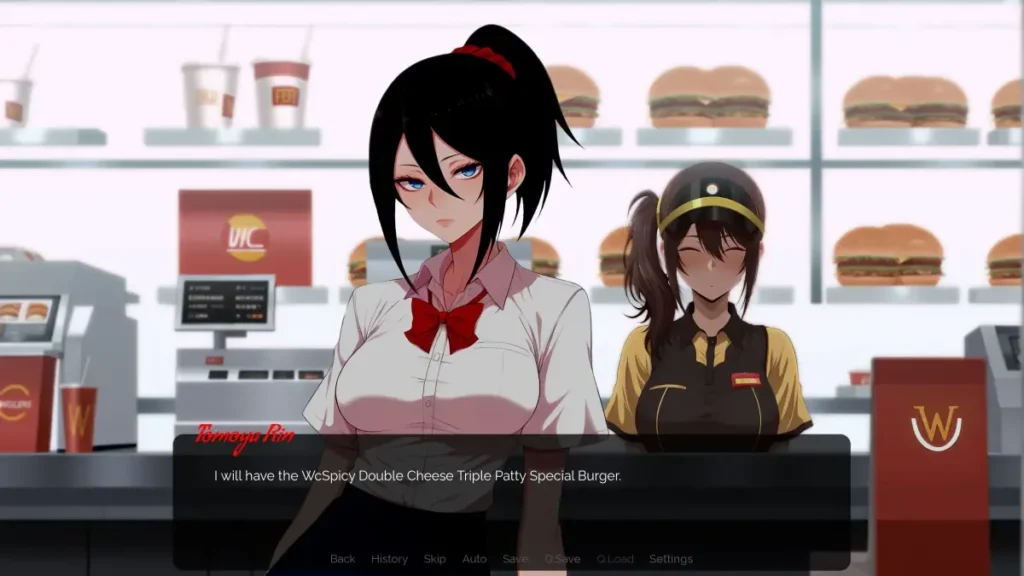






Aperture review
Explore the immersive narrative, puzzle mechanics, and character-driven experience of this unique visual novel
Aperture stands out as a distinctive interactive experience that blends compelling narrative storytelling with engaging gameplay mechanics. Set within the prestigious Hoshino Academy, this visual novel immerses players in a mystery-driven adventure centered around photography, relationships, and personal transformation. Whether you’re drawn to character-driven narratives, puzzle-solving elements, or emotionally complex storylines, Aperture delivers a multifaceted gaming experience. This guide explores the core features, gameplay systems, and narrative depth that make Aperture a memorable title for players seeking nuanced, choice-driven entertainment.
Understanding Aperture’s Core Gameplay and Mechanics
At the heart of Aperture lies a deceptively simple tool that rewrites the rules of reality: the portal gun. This isn’t just a weapon; it’s your paintbrush, and the sterile test chambers are your canvas. The entire foundation of Aperture gameplay mechanics is built upon the principle of portal creation puzzle solving. You place one portal on a flat, white surface, place another somewhere else, and suddenly, two distant points in space are connected. Walking into the blue oval instantly steps you out of the orange one. It sounds straightforward, but this single mechanic blossoms into an astonishingly complex web of spatial reasoning.
The genius of Aperture is how this basic tool interacts with the game’s unwavering physical laws. This isn’t just about creating shortcuts; it’s about manipulating physics itself. To truly master the experience, you need to understand four interconnected systems: the portals themselves, the conservation of momentum, the objects you can manipulate, and the environment you’re manipulating. These aren’t separate features—they’re threads in the same brilliant tapestry.
To give you a quick-reference guide, here’s a breakdown of these core systems:
| Core Mechanic | Player Action | Primary Purpose |
|---|---|---|
| Portal Creation | Firing two connected portals onto compatible surfaces. | Redefining spatial paths, creating new trajectories, and bypassing obstacles. |
| Momentum Conservation | Falling or moving at speed through a portal pair. | Generating kinetic energy to cross large gaps or reach high platforms. |
| Object Interaction | Picking up, placing, and launching weighted cubes, spheres, and other elements. | Activating switches, redirecting energy beams, and creating physical steps or shields. |
| Environmental Analysis | Observing chamber layout, surface types, hazard placement, and possible endpoints. | Forming the initial plan and identifying the “language” of the puzzle you need to speak. |
Your journey in Aperture is one of silent discovery. You are the protagonist, and your actions—where you place a portal, how you choose to move a cube, whether you follow the stated goal or look for another way—are your dialogue. This character-driven experience isn’t told through branching text options, but through the physical choices you make in the environment. Defying the often-misleading AI instructions, peering into hidden corners, and simply experimenting with the tools at your disposal are the meaningful gameplay choices that define your story. 🎮
How Portal Creation and Spatial Puzzles Define the Experience 🌀
Remember the first time you fired a portal? I do. The tutorial voice told me to place one on the floor and one on the ceiling. I jumped in and fell forever in a thrilling, gravity-defying loop. That moment of pure, childlike wonder is the essence of Aperture. The portal creation puzzle solving begins not with complex math, but with a fundamental shift in perception. You must stop seeing walls, floors, and ceilings as barriers and start seeing them as potential doorways.
The core loop of Aperture gameplay mechanics is a cycle of observation, hypothesis, and experimentation. You enter a chamber, and the exit door is tantalizingly visible but utterly unreachable by conventional means. Your job is to perform an environmental puzzle analysis. You scan the room: Where are the portal-compatible white panels? Is there a ledge with a button that needs a cube? Perhaps a laser emitter needs to be redirected to a receiver. The spatial path mechanics are all about deconstructing the obvious, linear path from A to B and reconstructing it through a portal-shaped wormhole.
Let me give you a practical case study from my own playthrough. One early chamber had a gap too wide to jump across, with the white panel for a portal placed frustratingly on the wall behind me. The obvious solution was to turn around, fire a portal behind me, then fire another on the wall across the gap, creating a bridge. But what made it sing was a later variation. The same gap existed, but now the only white panels were on the floor just before the chasm and on the distant ceiling above the exit. The solution? A portal on the floor at your feet, and another on that ceiling. You don’t walk across—you fall up. You step into the floor portal and are flung out of the ceiling portal, landing gracefully by the exit. This elegant flip of perspective is the magic of Aperture. It teaches you that “forward” is a relative term.
Pro Tip: Always look for the second white panel. The first one is usually obvious. The game’s real challenge begins when you find the second and have to understand the relationship between them. This is the heart of spatial path mechanics.
This system creates a profoundly satisfying learning curve. Early puzzles teach you the simple connection. Later ones introduce moving platforms, where placing a portal on a moving surface creates a dynamic, shifting gateway. You learn that only certain surfaces accept portals, forcing you to plan your “chain” of movement carefully. The entire Aperture experience is built on this foundation of reimagined space, making every solved chamber feel like a genuine intellectual triumph. 🏆
Momentum Conservation and Object Interaction Systems ⚡
If portal creation is the game’s grammar, then momentum conservation mechanics are its poetry. Aperture adheres to a beautiful, consistent law: speed and direction are preserved when moving through a portal. Fall from a great height into a portal on the floor, and you’ll shoot out of its pair on the wall with enough velocity to soar across the room. This is the key to the most exhilarating kinetic energy puzzle solutions in the game.
The classic example, and one I practiced for an embarrassing amount of time just for fun, is the “fling.” You place a portal high up on a wall across a gap. You place the second portal on the floor at the edge of a cliff. You jump off the cliff, falling into the floor portal. As you exit the high wall portal, you aren’t just walking out—you’re launched horizontally, conserving all the kinetic energy from your fall. You fly across the gap you could never jump, landing safely on the other side. Mastering this timing and placement is a core Aperture gameplay mechanics skill.
This seamlessly integrates with the object interaction systems. It’s not just about you flying around. Those trusty Weighted Storage Cubes? They obey the same laws. Need to hit a button high on a wall? You could build a tedious staircase of boxes. Or, you could place a portal on a high wall near the button and another on the floor of a deep pit. Drop the cube into the pit portal, and it rockets out of the wall portal, smacking the button with authority. 🧊
The object interaction systems go beyond simple cubes, though. You’ll encounter:
* Weighted Companion Cubes: (Don’t get attached. Seriously.)
* Energy Balls & Lasers: These can be redirected through portals, often to power up doors or destroy hazardous material.
* Turret Bots: Yes, even enemies can be moved through portals, turning their own weaponry against them or using them to block a path.
The puzzles become beautiful Rube Goldberg machines of your own design. You might use a momentum conservation mechanics fling to get a cube to a platform, then use that cube to block a laser, allowing you to safely place a portal to then fling yourself to the final switch. Each element feeds into another, and the joy comes from discovering these connections through playful experimentation, not rote instruction.
Environmental Analysis and Problem-Solving Strategies 🔍
Before you ever fire a portal, you need to learn to read the room. Environmental puzzle analysis is the silent, first step in every Aperture challenge. Each test chamber is a self-contained statement of a problem, and your job is to decode its language. This is where the game transitions from a physics simulator to a detective story.
When you enter a new chamber, don’t just start shooting portals wildly. Pause. Observe. Ask yourself these questions as part of your environmental puzzle analysis:
* What is the Goal? Where is the exit? Is it locked? What does the lock need (a button pressed, a laser connected)?
* What are my Tools? Where are the portal-friendly surfaces? Are there cubes, lasers, or other interactive elements in the room or in an adjacent one I can access?
* What are the Hazards? Where is the deadly goo (a.k.a., “the soup”)? Where are the turrets? Identifying threats informs safe portal placement and movement paths.
* What is the Sequence? Rarely is a puzzle solved with one action. You often need to enable A to get B, to then achieve C. Work backwards from the goal.
Let’s apply this to a real kinetic energy puzzle solutions scenario. You enter a room with a high exit walkway. There’s a pit of goo below, a single cube in a recessed area, and a switch on the wall that opens the exit door for only a few seconds. The white panels are on the wall opposite the switch and on the ceiling high above the walkway.
Your analysis might go like this:
1. Goal: Get to the exit walkway. The switch opens the door temporarily, so I need speed.
2. Tools: One cube, two key portal surfaces (wall and ceiling).
3. Strategy: The cube is likely for the switch. But throwing it won’t work—the switch is too high. I need to use momentum. I can place a portal on the wall behind the cube’s recess and one on the ceiling above the walkway. Drop the cube into the recess portal, and it will launch onto the walkway. But then how do I get there fast enough?
4. The “Aha!” Moment: The cube’s trajectory gives you the idea. Use the same portal pair. Place the cube on the switch to open the door, then immediately jump into the recess portal yourself. You’ll be flung onto the walkway with the perfect timing, thanks to the conserved kinetic energy from your short fall.
This interconnected thinking—where object interaction systems enable momentum conservation mechanics based on your initial environmental puzzle analysis—is the brilliant core loop. The game trusts you to make these leaps. It presents a consistent, logical world and says, “Figure it out.” There’s no hand-holding, only the quiet guidance of cause and effect.
Your role as the silent protagonist is perfectly suited to this. You aren’t distracted by dialogue choices; your entire focus is on the environment. Choosing to explore a hidden alcove (often behind a portal you creatively placed) or to listen to the eerie, hidden narratives in the environment feels like a personal rebellion, a choice you made. The Aperture gameplay mechanics are not just a set of tools for solving puzzles; they are the means by which you interact with and define the narrative itself. Every flipped switch, every launched cube, every triumphant fling across a chasm is a line of your unique story in the compelling, puzzling, and utterly unforgettable world of Aperture.
Aperture delivers a sophisticated gaming experience that seamlessly integrates puzzle-solving mechanics with emotionally resonant storytelling. The game’s strength lies in its commitment to meaningful player agency—where choices genuinely shape narrative outcomes and relationship dynamics. From the foundational portal mechanics that challenge your problem-solving skills to the intricate character arcs centered around Rin and the photography club mystery, every element serves the larger narrative. The immersive features including cinematic animation, atmospheric sound design, and robust customization systems create an engaging world that rewards exploration and multiple playthroughs. Whether you’re drawn to the intellectual challenge of spatial puzzles, the emotional depth of character-driven narratives, or the satisfaction of discovering hidden story paths, Aperture offers something compelling. If you’re seeking a visual novel that respects player intelligence and delivers genuine consequences for your choices, Aperture stands as a distinctive title worth experiencing.